Do GLP-1 Patches Work? The Facts on Weight Loss & Safety

Updated: Jul 12
Direct answer: No — currently available "GLP-1 patches" sold online are not clinically proven to work for weight loss or diabetes management, and there is no FDA-approved GLP-1 patch on the market.
The idea of a needle-free delivery system is appealing, but the science doesn't support the marketing claims made by these products.
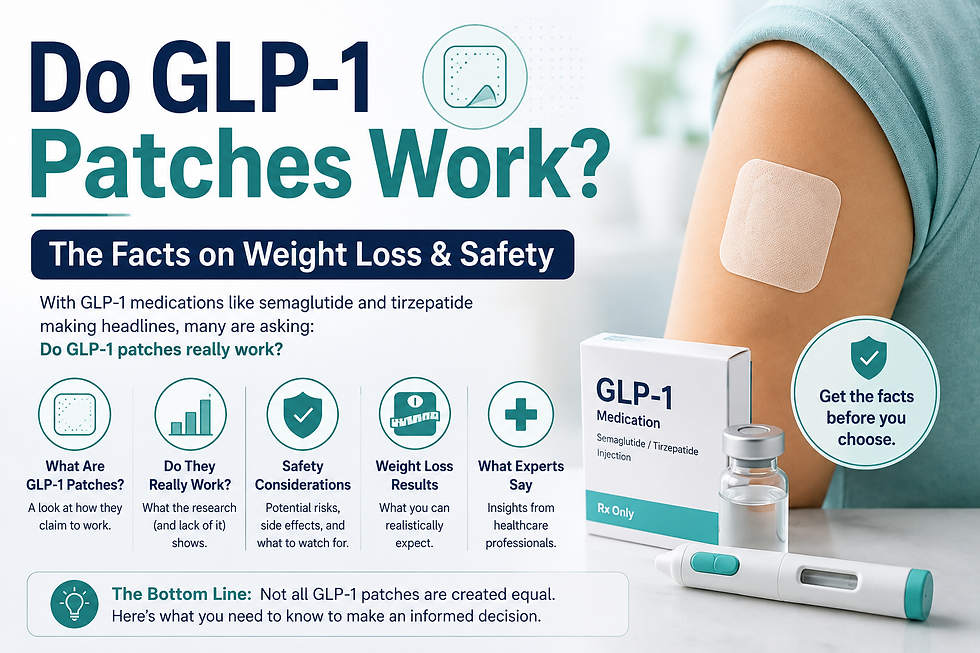
Why Current GLP-1 Patches Don't Work
Lack of clinical evidence. There are no large, randomized controlled trials showing that commercially available GLP-1 patches produce meaningful weight loss or blood sugar control in humans.
Biological barriers. GLP-1 receptor agonists (like semaglutide and tirzepatide) are large peptide molecules. Human skin acts as a natural barrier that prevents these molecules from being absorbed transdermally in any therapeutic amount — this is a basic pharmacological limitation, not a manufacturing problem that better formulation can solve.
Not FDA-approved. No transdermal GLP-1 patch has been approved by the FDA for weight management or diabetes. These products haven't undergone the safety and efficacy testing required for prescription medications.
Supplements vs. Prescription Medications
Marketed as supplements. Most online "GLP-1 patches" are sold as dietary supplements, typically containing ingredients like B-vitamins, berberine, or cinnamon extract — not actual GLP-1 medication. Supplement regulation is far less stringent than drug regulation, and these products aren't required to prove efficacy before being sold.
Misleading naming. Many products use names deliberately similar to prescription GLP-1s to create confusion. Independent analysis from Science-Based Medicine notes that ingredient lists for these patches are often vague or missing entirely.
What's actually proven. FDA-approved GLP-1 therapies (semaglutide, tirzepatide, liraglutide) are currently only available as injections or oral tablets, backed by large randomized controlled trials. These remain the only GLP-1 options with independently confirmed efficacy for weight loss and glycemic control.
Safety Considerations
Delayed care — time and money spent on unproven patches is time not spent on treatments with demonstrated outcomes, which matters more for anyone managing a weight-related health condition.
No quality control — without FDA oversight, there's no guarantee of ingredient accuracy or batch-to-batch consistency.
Skin reactions — adhesive patches can cause contact dermatitis or irritation regardless of what's inside them.
If you're currently on a prescription GLP-1 and considering switching to a patch, talk to your doctor first — stopping active treatment can mean losing progress already made.
The Role of Nutritional Consistency
Regardless of which approach someone uses — FDA-approved medication, lifestyle changes, or neither — the foundation of sustainable weight management is consistent nutrition. Tools like DietApp support that by tracking protein, fiber, and hydration, which matter most when appetite or food intake changes for any reason.
Written by Hattie Sykes, Manager at DietApp.com. This article is for general informational purposes and is not medical advice. Speak with a healthcare provider before starting or stopping any weight management treatment.
Explore All GLP-1 Medications on DietApp.com
Liraglutide Family
Semaglutide Family
Rybelsus Guide (discontinued — transitioned to Ozempic tablet)
Tirzepatide Family


Comments